Undergraduate Programme

BA (Hons) Digital Media

Why this Programme?

The BA (Hons) Digital Media course at NEXT Campus equips students to navigate a dynamic and rapidly evolving landscape shaped by the proliferation of digital media technologies. Students will study emerging topics, such as AI (Artificial Intelligence) in the digital media production process, social media, extended reality (such as augmented reality and virtual reality), and web design.

The course develops core competencies and subject knowledge on these topics, which prepare students for a range of employment roles in the Digital Media sector. These Digital Media advancements have not only transformed how individuals interact but also play an integral role in people’s lives, impacting areas such as politics, education, media, art, and industry.

Recognising the significant career opportunities in the Digital Media industry, this course has been designed to address the need for qualified professionals specialising in various aspects of Digital Media, in the broader pathways of design, development, media production, and research. The rationale for the course is that it equips students with a comprehensive skillset in Digital Media, encompassing theoretical, practical, and academic dimensions. Our commitment to inclusive assessment, as part of the university’s wider strategy for teaching, learning, and assessment, makes it a distinctive course underpinned by professional practice and core competencies for working in the creative industries.

Industry Partner

Modules

Level 4

SJ4051NM Writing and Research Skills (15 credits)

This module will equip students on courses in Creative Technologies, Media, and Journalism with essential transferrable skills of good writing and also introduce them to basic research and academic writing skills.

This module aims to develop good writing in a variety of ways, focusing on expectations and standards in the professional and academic environments. Your studies on this module will include two major elements: good writing principles for your future profession, and academic writing skills for your higher education.

This way, you will first study what makes a good text: from the principles of clarity, brevity and simplicity to developing personal style. You will examine different types of texts, their communicative purposes and expectations in the professional world, as well as structure, narrative and storytelling principles, from emails and blogs to professional reports.

In the second part of this module, you will focus on a crucial skill in higher education: academic research, writing, and referencing. You will learn to search for, review and analyse information in academic and non-academic sources, extract relevant information, and use it to develop and support your argument in academic writing or other forms of presentation. You will examine and practice the specific language of academic writing, the structuring of academic texts and the goals and principles of academic referencing.

In addition, this module will help you develop confidence and creativity in writing, techniques to overcome writer’s block and ‘fear on a blank page’, and working in teams on creative and academics tasks to foster inclusive team-working skills.

In class, you will learn through a combination of lectures and practical classes, with weekly writing tasks. You will be assessed through a series of blog posts, a written report and weekly online journal contributions.

CU4056NM Digital Skills (15 credits)

In this module, you will be introduced to the creative digital skills required for an undergraduate degree and career path in the Creative Industries, Digital Media, and Journalism.

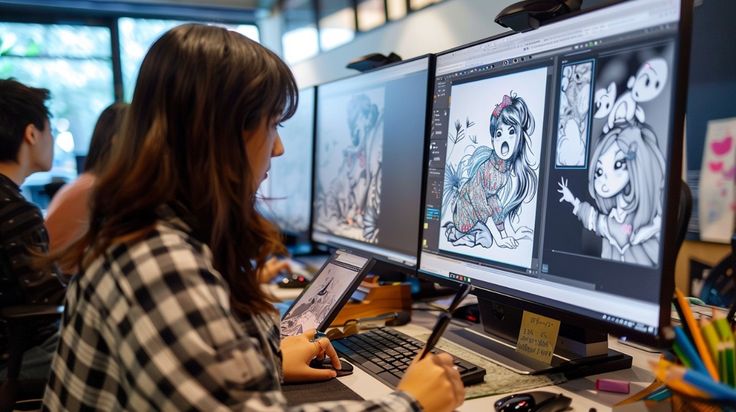
This digital literacy module provides an introduction to the software and practical skills required to produce a creative online presence and build a professional profile. You will be encouraged to develop your media practice utilising a range of tools and software packages. These skills in image production, for game and web design, desktop publishing and micro-blogging will be utilised in the development and presentation of CV’s, promotional materials, posters, and flyers. The work you do on this module will be presented in a portfolio of digital practice and expertise, and you will additionally develop important skills in managing data and media assets in creative digital packages.

You will be introduced to key aspects and notions of employability. You will make use of these skills, knowledge, and understanding to plan and develop your career. You will reflect on your personal attributes, and examine the essential skills demanded of your favoured occupation. You will be encouraged to make use of these skills and knowledge to begin building your professional network and to formally and systematically consider your career development goals and strategies.

You will explore the ways in which digital media has transformed the nature of work and the development of careers. You will be encouraged to employ critical methods in the understanding of and analysis of digital media in the workplace context and explore opportunities for developing digital and media careers.

This module aims to:

  • Equip you with the digital skills needed to prepare and present your work in the appropriate manner for your chosen field.
  • Develop data and file management skills fundamental to the creative and media industries.
  • Develop reflective practices by reviewing the needs of a design brief.
  • Build confidence working with digital files, applying a range of document design and editing techniques.
  • Allow you to better present your work for its intended audience.

CU4062NM Digital Imaging (15 credits)

This module will introduce image creation placing it within the wider context of graphic design and photography. The module will explore a range of photo composite approaches along with vector-based drawing techniques for inclusion in a digital portfolio. It will first develop the skills needed for creative image manipulation ranging from retouching of photographs to building complex multi-photo montages through image layering, masking, and application of filters.

The second phase of the module will then cover vector-based image creation with a bias for corporate branding and will consider where photo manipulation and vector-based imaging cross-over and diverge. Subjects common to both disciplines such as typography, colour trends, and output formats will be put into context relative to industry requirements. These techniques will develop the student’s understanding of both theoretical and practical issues of the processes of image creation and manipulation. It will also give context as to why these techniques are relevant and how they are used in industry.

This core module aims to:

  • Introduce visual imaging techniques.
  • Introduce students to the potential of conveying ideas using images and graphics.
  • Understand the moral and ethical issues of manipulating imagery.
  • Create and manipulate images for a range of media formats.
  • Develop vector-based designs with a consideration to corporate identities.
  • Understand and apply the principles of corporate branding.
  • Create a range of photo composite and vector-based material for a digital portfolio.

CU4050NM 2D Computer Animation (15 credits)

The module introduces concepts, production methods, and techniques from the Animation industry and related areas. The module introduces skills in foundational animation techniques, including script writing, concept art, character design, pose-to-pose animation, rigging for animation, and lip-sync.

Concepts, techniques, and principles that enhance the design and production of linear narrative, character, and environments are introduced, and students’ skills in these areas are developed. Upon completion of this module, students will be able to effectively represent character, emotion, movement, and narrative.

Principles will be introduced through lectures, demonstrations, and participative sessions, with practical techniques explored in workshops.

SM4058NM Interaction Design (15 credits)

Interaction Design is an expanding field concerned with the requirements of end users of interactive digital products. This module introduces key theoretical concepts – user experience design, user-centred design, design- thinking, human- computer interaction, and digital design approaches – providing an opportunity to put these principles into practice. Putting these theoretical principles into practice involves a process of understanding both design and psychology to realise the requirements of end users.

The module’s subject specific skills will enable students to understand and apply the relationship between theoretical concepts and their practical application, with one assessment involving a real client problem brief to design a solution around. The interaction design project development process will allow students to apply interaction design skills to identify the effects of interaction design on end users.

The module focuses on practical applications used more than ever for the field of Interaction Design and Emerging Technologies.

Practical exercises, lectures, demonstrations, and field trips will aid students in developing subject-based, practical, and analytical skills to produce an interactive product.

Module Aims:

  • To introduce students to key theoretical concepts in interaction design.
  • To examine the effects of interactive products on end users, through prototyping.
  • To provide students with a broad foundation of interactive design development.
  • To introduce design thinking as a central aspect of interaction design.

CU4057NM Game Design (15 credits)

This module provides an introduction to the topic of computer games from a variety of perspectives.  It is designed to help students understand and appreciate many of the different technical and psychological approaches games designers and developers use in their work.   
It will also facilitate the development of the skills needed when developing gaming applications using contemporary tools.

Students will work in teams on a range of game design challenges, creating and testing non-digital games in various media. They will engage with asset creation and simple scripting, to produce a web-based portfolio.

Aims:

  • Provide an understanding of the complexity and potential of computer game design, including the technology required for developing responsive multimodal interactive systems.
  • Develop creative and lateral thinking in response to a range of stimuli, with particular reference to game design.
  • Develop communication and study skills.
  • Offer opportunities for teamwork and professional development.
  • Equip students for employment in the games industry, web and digital media industries.

SJ4050NM Moving Image Practice (15 credits)

This is a highly creative and practical module, which will introduce students of differing abilities to each of the fundamental stages of moving image (digital video) production, from development to filming to post-production, through a variety of weekly studio-based practice workshops and classroom exercises.

You will learn how to develop and pitch a short film based on study of genre and film style theory, how to prep your shoot through the use of storyboards and pre-production research, and then shoot and edit your project through knowledge of filmmaking acquired during the module.

The key skills and knowledge you will be expected to acquire and develop are:

  • Understanding of moving image practice through the study of key filmmaking theories and principles such as visual composition, genre and film style (mise en scene, cinematography and editing)
  • Understanding of digital video production techniques through study and practical workshop use of camera, lighting and editing technologies
  • Understanding and experience of different production roles (director, producer, cinematographer, editor) and collaborative filmmaking through working in small film project groups
  • Understanding and experience of professional industry methodology which will provide you with a range of potentially employable skills upon graduation
  • Understanding and development of communication skills through learning how to present a film pitch, collaborative teamwork and critical reflection

CU4051NM 3D Modelling and Texturing (15 credits)

This module is designed to give you a solid introduction to the underlying concepts and principles of Computer Graphics (CG) and images as well as some practical experience of applying relevant techniques and tools. You will be introduced to the 2D/3D computer graphics and images, production workflow, relevant documents (concept art, sketches, model sheets, etc), main modelling and texturing concepts and techniques, as well as how to use and apply appropriate techniques and tools to produce an artefact and develop a communication style in the subject topic. No prior learning is required for this module.

The processes of modelling and texturing usually are interlinked and, because of that, optimizing the geometry will make changes to the texturing, and vice versa. Therefore, this module will teach relevant techniques for matching (and optimizing) the geometry of the models, UV layouts, creating material/texture maps, and mapping them on to the geometry models while keeping the number of textures needed to a minimum and at the same time without losing extra details that give a personality to (game) character or assets.

Students will have to create relevant artefacts using an industry standard modelling/texturing package. The creation of models and textures for computer games is presented from the technical artist’s perspective and demonstrates to students the design, problem solving, and relevant workflow, using appropriate techniques and tools.

Modules

Level 5

SM5086NM Augmented Reality Design (15 credits)

In this module, students will study the design of Augmented Reality (AR) as it applies to Marketing, Fashion, Retail, and other areas. This module is designed to provide a comprehensive understanding of AR; students will learn the different contexts for augmented reality. Central to the module is the emphasis on the design skills and technological underpinnings necessary for AR design. This includes learning about designing intuitive user interfaces and crafting engaging user experiences within AR environments.

The module aims to:

  • Equip students with the skills to create user- centric and accessible AR applications
  • Gain experience of prototyping different AR content & scenarios
  • Expose students to different industry practices for AR creation

Through hands-on projects and exercises, students will apply these tools to create AR experiences.

SM5094NM Web Design (15 credits)

This module will examine the most up-to-date website design methods, focusing on a range of technical skills including basic text formatting, uploading images, grid design, graphic design, simple coding and user experience theory. It will discuss how the commercial needs and corporate identity of a website determine its look and feel and how this in turn influences the website’s overall navigational structure, signposting, interactive buttons, and call-to-actions.

It will also discuss how website design needs to be flexible to incorporate third-party banner ads without disrupting the overall brand. Additionally, the module will analyse the landing page experience across different browsers and devices, with the purpose of optimising the user experience. Students will also learn the importance of SEO (search engine optimisation), keywords, social media links, and other ranking values in raising the profile and visibility of the website in search engines such as Google. Finally, students will analyse site metrics to understand how the website is performing, plus they will look at website security and protection.

This module aims to:

  • Build a branded website.
  • Examine and evaluate the major issues involved in cross-platform display on desktop, tablet and mobiles.
  • Understand ergonomic principles for web design.
  • Develop a simple and clear navigational structure.

SM5084NM Visual Culture (15 credits)

This one-semester module aims to develop students’ appreciation for and understanding of research in relation to visual aspects of culture. The module provides students with methods and conceptual tools for approaching independent research into visual culture, including art, photography, film, and television, and using for visual material as a research tool.

The module builds upon students’ prior knowledge of theories and debates relevant to visual works and materials, and it will encourage and facilitate the development of deeper engagement with, and understanding of, this area of research. The module provides preparation for dissertation research involving visual culture using visual material within research.

You will develop knowledge pertinent to the understanding of visual culture within a scholarly context, including:

  • understanding a variety of ways in which the visual can be understood
  • appreciation of the value of visual material in different academic research contexts
  • understanding the benefits and limitations of visual material
  • appreciation of issues of visual rhetoric and the politics of images

The practical and intellectual skills gained are all transferrable and highly relevant to future employment in a wide range of areas, and particularly within parts of the cultural industries specifically concerned with visual materials.

SM5091NM Motion Branding (15 credits)

This module will explore short form motion graphic animation sequences for TV and film titles, web banner ads, social media posts, advertising, brand promotion, gaming, and education. It will cover industry-standard software techniques for manipulation of typography, visual effects, patterns, backgrounds, characters, shapes, and audio. The moving content will be organised on a linear timeline with the finished product being either a pure animation sequence or an animation combined with real footage.

This module will explore how digital animation has many applications across a wide range of fields that can have many styles and looks, depending on the techniques used and on which platform it is displayed.

Module Aims: 

  • Explore the relevant software needed to design, build, and output motion graphics.
  • Understand how motion can be used to enhance brand awareness.
  • Develop and test visually engaging content.
  • Research the marketing potential of motion graphics.
  • Design a series of motion ads to be included in the student’s final employment portfolio.

SM5063NM Social Media Strategies (15 credits)

There has never been a more exciting time to study Social Media Strategies. Social Media Strategies now play out in every aspect of business, government, and society today. This module offers a critical eye on social media strategies, identifying those that worked as intended and those that didn’t. Through looking at current examples of social media and social media strategies, you will learn what a strategy is and how best to deploy it for the agenda and goals of an organisation.

Teaching methods include formal lectures, seminar discussion, student presentations, and online material. Students will be expected to attend formal lecturers and take notes, read from primary and secondary source material, and comment on their readings. They are expected to creatively engage with social media content creation as it embeds within an overall strategy of a particular industry.

This module aims to:

  • Enable students to evaluate key approaches to understanding current social media and strategy.
  • Encourage students to develop critical awareness of their everyday experience of social media.
  • Establish links between theoretical, technological, social and ethical aspects of social media.

SM5087NM Creative Coding (15 credits)

This module introduces students to the field of creative coding, blending artistic practices with learning to code. The advent of AI (Artificial Intelligence) programming tools allows for the realisation of more rapid experimentation with creative code to realise a new and novel digital artefact.

The student will acquire knowledge of different web frameworks for creative code and develop skills in three fundamental interactive areas, digital artworks, animation, and visualisations. The module emphasises creativity experimentation and coding as a medium for artistic expression.

The module aims to explore:

  • the integration of interactivity and animated elements
  • the frameworks for the design of creative artefacts
  • the utilisation of web technologies to learn to express a creative idea.

SM5088NM Digital Project Management (15 credits)

This module is designed to enable students to appreciate and implement digital project management practices and tools, emphasising the use of AI in creative and production processes. It covers a broad spectrum of topics essential for managing digital media projects, such as AI’s role in enhancing creativity and efficiency, team dynamics, client interaction, outsourcing strategies, and asset coordination.

Students will be introduced to the planning and production lifecycle, with a particular attention to project management methods and the use of project management tools, including GenAI technologies. Students will acquire the skills necessary to evaluate critical aspects of digital project management issues. They will learn to effectively plan, organise, and execute projects, and learn digital and management skills, which would then be applicable to their area of professional interest in Media, Cultural, or Creative Industries or in industry more generally.

The module offers hands-on experience in design team roles, allowing students to align their learning with their industry specialisations. This educational experience aims to equip future professionals with a deep understanding of digital project management in the Creative Industries, preparing them to manage innovative projects with confidence and expertise.

The module aims follow from the description, specifically:

  • To enable students to evaluate digital media project management best practice.
  • To allow students to experience design team roles according to their industry specialism.
  • To enable students to plan and organise the production of a digital media project with relevant tools.
  • To critically analyse the role of AI and other project management tools in project management.
  • To enable students to take on various roles within a design team, allowing them to apply their knowledge in an industry relevant assessment.

SJ5092NM Styling and Journalism (15 credits)

In this module, you will explore and practice styling within Fashion Journalism and related industries and critically analyse the relationship between the Media and the Fashion industry, and the position of a multi-skilled Fashion Journalist and Stylist within these industries. Thus, this module aims to develop both your practical skills expected by the Fashion and Media industries and the analytical skills implied by the higher education in Journalism and Fashion Marketing.

Your practical training will focus on developing employable skills through producing styling and journalistic output in the variety of genres and formats that are expected by the industry – from researching, writing to brief, producing multimedia packages, resourcing looks and products, to specific real-life briefs.

You will learn how to style to brief and to budget (for example, for cocktail parties, launch events, red carpets), how to promote your work through social media posts, and how to produce content on the intersection of Journalism and Styling, mainly through magazine articles and features. You will also learn how to critically analyse the work of others within the industry and examine the industry-specific and global cultural implications of their work.

In class, you will learn through a combination of lectures, practical classes, and seminars, and weekly Styling and Journalism tasks. You will be assessed through a Styling Project presented through social media, a Portfolio of 5 pieces of writing with multimedia elements, and an Online Journal.

MD5062NM Podcast Production and Sonic Branding (15 credits)

In this module you will explore the techniques and practices in producing podcasts and developing audio branding. In doing so you will explore different creative approaches to working with audio and music as a means for branding in a range of different media.

In this practice-based module, you will learn to plan and structure podcasts, as well as develop an understanding, and skillset in audio editing; dialogue recording; and post-production techniques.

You will be introduced to a range of principles relating to the use of commercial music including sonic branding; jingles; and music licensing.

You will have the opportunity to work in groups as production teams, taking up specific working roles in the production of a podcast. In doing so, you will develop essential real-world working practices, including creating production diaries, and running sheets.

By planning and structuring the podcast, you will have the opportunity to develop a research topic, or subject of interest in a creative manner.

This module aims to:

  • Explore principles of sonic branding in a range of media.
  • Develop your knowledge of audio production and recording methods.
  • Apply audio editing and production practices to create a professional podcast.
  • Introduce potential career pathways in audio and podcast production.
  • Enhance team working practices in audio projects.
  • Develop a deeper understanding of music copyright.

Modules

Level 6

CU6063NM Creative Research Dissertation Project (15 credits)

This module allows students to develop research and project planning that encapsulates learning and aspirations developed throughout their course. It is expected that students can demonstrate a range of skills and techniques acquired during previous years.

The project module should encase their own investigations and interests while targeting a specific audience defined in advance. This module allows students to demonstrate academic and/or professional skills compatible with their level of study as the project stimulates experimentation and innovation as part of their preparation for future academic or professional life.

The module aims to:

  • develop skills of planning, research, and delivery of a professional-level project in their area.
  • help students choosing areas of interest or affinity in their professional practice.
  • enhance writing, research, and pitching skills.
  • equip students with the skills necessary to produce an independent body of work relating to their discipline
  • prepare students for future independent practice.

CU6P50NM Creative Practice Dissertation Project (15 credits)

This module allows students to put into practice their research and project planning, based on learnings from the previous semester research module. They will develop a final project that encapsulates the learnings and aspirations from previous years of their course.

The project module should encase their own investigations and interests while targeting a specific audience defined in advance. The final output will happen in coordination with their course supervisor and will be course-specific.

This module allows students to demonstrate academic and/or professional skills compatible with their level of study as the project stimulates experimentation and innovation as part of their preparation for future academic or professional life.

The module aims to:

  • deliver and plan a professional-level project in their area.
  • help students choose areas of interest or affinity in their professional practice.
  • enhance writing, research, pitching skills, as well as the development of specific artefacts specific to their course.
  • equip students with the skills necessary to produce an independent body of work relating to their discipline that can enhance their employability by showcasing an independent body of work.
  • prepare students for future independent practice.

SM6077NM App Design (15 credits)

Using industry standard software, the student will design a proof-of-concept prototype app to a predefined brief, in either the profit or nonprofit sector. Adhering to professional practice, the student will follow key milestones to deliver the app prototype.

This will include writing a production plan, researching the target audience, analysing the competitors, conducting user feedback, processing the data, and applying the findings to the app prototype. The student also will create and maintain a brand identity throughout the app with the use of the logo, colour palette, navigational hierarchy, and accompanying suite of buttons. This will be outlined and defined in an accompanying app style guide.

The module aims to:

  • Develop skills and knowledge in design research towards production of an app design.
  • Support problem-based learning and employability skills in relation to an app.
  • Support students’ applications of methodologies, models, and theories of app design.
  • To develop student’s skills in written, oral, and visual presentation.

SM6080NM Design of Virtual Reality (15 credits)

Virtual reality is a new and emerging field which will impact every aspect of the Creative industry from Music to Fashion. The emergence of Virtual Reality in the digital media production process has the potential to revolutionise the Creator economy. New forms of content creation will equip students with the subject specific skills in advanced media literacy and the tools required to understand and critically analyse the metaverse.

This module aims to embed future understanding of interaction design, artificial intelligence and virtual reality in the creative landscape. Students will be able to assess the transformative effects of VR technologies within their field of expertise, identifying opportunities and challenges. This module delves into the practical and theoretical implications of this convergence on various creative industries.

By exploring the latest advancements in VR, students will gain insights into how these technologies are transforming the digital media production landscape, enabling previously unexplored levels of creativity and personalisation. The module empowers students to not only produce cutting-edge content but also critically evaluate the ethical and societal implications of these technologies.

This module is designed to increase understanding of how VR technologies can be deployed to create engaging narratives, enhance storytelling, and deliver new experiences.

This module aims to equip students with the skills necessary to navigate and shape the future of the metaverse – a collective virtual shared space, created by the convergence of virtually enhanced physical and digital reality. Students will explore the potential of the metaverse as a platform for innovation in communication, entertainment, and education, examining how it can foster new forms of social interaction and collaboration. They will be equipped with the knowledge and skills to lead and innovate in their chosen specialisms, ready to tackle the challenges and opportunities presented by the rapidly evolving landscape of the virtual world.

SM6085NM UX Design (15 credits)

UX (user experience) design considers all the elements that shape and influence a user when interacting with a digital product or service. This module introduces students to the user experience (UX) journey when using a digital product. It will discuss methods for understanding user experience and how it can be enhanced by conducting data collection and applying the findings to improve the design. This will include developing a strategy to understand and implement any changes without disrupting the product. It will also explore inclusivity to ensure an implemented UX does not alienate users.

The module will also discuss the usefulness, usability, credibility, desirability, accessibility and value of a UX in relation to the products purpose. By building and testing a prototype and evolving and improving the product’s UX, the student will gain an understanding of the theory and process needed to improve the interaction between user and product.

User interface design (UI), which is the visual look and style of a product’s interface, will also be covered as part of the overall UX design solution. The outcome will be an enhanced UX designed by the student that balances both the needs of the user and stakeholder.

SM6073NM Urban Media (15 credits)

Urban Media promotes understanding urban spaces as media outlets in their own complexity while teaching the use of media devices and technology as a stepping stone for critical engagement with space, its histories and inequalities.

This module provides students with critical knowledge to interpret and advance the use of media devices and infrastructure as tools to engage with urban environments.

Lastly, Urban Media draws on methods to capture the city as the ultimate stage for cultural expression by taking on critical practice for creating new forms of conviviality.

The module aims to:

  1. map and explore critical scholarship at the intersection between urban humanities, digital media, media and communications, and cultural studies.
  2. problematise the notion of space and culture for the common good according to the latest technologies, its perceptions and purposes.
  3. lead to an appreciation of the city in its sentient, digital, and post-digital environments.
  4. investigate the media potential to inform citizens about the urban environment, its inequities, and intersections.
  5. develop innovative approaches for a better rapport between populations and the urban equipment.

SM6081NM Digital Video Post Production (15 credits)

This module will examine, from an interdisciplinary perspective, techniques for video post-production. Students will analyse current trends in video post-production across a range of digital media industries: Music, Journalism, Media, Marketing, Film, and Games. This module will examine and analyse traditional and modern visual special effects using examples from film, music video, television and games to illustrate the development of new techniques for post-production video editing. The role of AI in the video post-production techniques will also be explored.

Practical exercises, lectures, and demonstrations will aid students in developing a wide spectrum of technical and analytical skills in the field of video post-production and visual special effects. Students will be expected to undertake all stages of the creative planning process to deliver an integrated digital video and audio project to complete the module.

This module aims to:

  • Develop and encourage confidence in the integration of appropriate editing software.
  • Analyse the most effective approach to a variety of post-production problems.
  • Work to a professional standard to an industry brief.

Students will be expected to undertake all stages of the creative planning process to deliver an integrated audio/video project.

SM6076NM Graphical Communications (15 credits) - Option

The module examines the multifaceted role of illustrations and graphic practices to effectively communicate ideas. It explores a variety of multimodal illustrations and graphic narratives to comprehend how graphical communication functions as a reflection, critique, and influential force in conveying visual messages through drawings and graphic language. The exploration spans a variety of mixed media encompassing both traditional and digital practices.

Through a multidisciplinary approach, the module explores how diverse graphical mediums interact with contemporary societal issues including but not limited to climate change, domestic violence, and war conflicts. The module explores a broad range of areas and mixed graphic content from typography and political signage, graphic humour and satire, political cartoons to iconography and graphic novels. Drawing on multidisciplinary perspectives from across theoretical frameworks including illustrations and comics theory, visual cultural studies to information design, the module places a strong emphasis on graphical communication to achieve compelling visual messages.

The module aims to:

  • Encourage students to enhance their understanding of illustrations and the broader language of graphic content in media communicative practices.
  • Facilitate the exploration of graphical messages in terms of aesthetics considerations and their significance in visual communication.
  • Provide diverse critical and theoretical perspectives for the analysis and creation of messages through a graphical lens.

CS6W50NM Career Development Learning (15 credits) - Option

The module enables students to undertake an appropriate, short professional activity related to their course with a business or community organisation and to gain credit for their achievements. The activity can be professional training or certification, a volunteering activity, employment through internal or external work-based placements, research-related activities, business start-up projects, entrepreneurship programs and more. Please see the complete list of accepted activities on the NEXT LMS.

Students are expected to complete a total of ~150 hours, 70 hours of which is direct engagement in any one or combination of career development learning activities. Progress should be recorded clearly in tri-weekly Learning Logs, which are part of the Portfolio. The ~70 hours can be completed in ~30 working days in FT mode or spread over a semester in PT mode.

Students should register for the module to be briefed, undergo induction and module planning and have their career development learning activity approved before they take up the opportunity. Students must be made aware that both the “Learning Agreement” (LA) and relevant “Health and Safety (H&S) checklist”, where applicable, must be approved before starting the learning activity. Activities started without prior explicit supervisor approval will not be accepted.

The module aims to provide students with the opportunity to:

  • Gain a valuable experience of the working environment and the career opportunities available upon graduation.
  • Sharpen critical thinking, creative problem-solving and the ability to articulate solutions correctly to decision-makers and budget-holders alike.
  • Undertake a career development learning activity appropriate to their academic level to gain exposure and access to professional networks.
  • Extend learning experience by applying and building on their academic skills and abilities by tackling real-life problems through enrichment and extracurricular programs related to student subject areas.
  • Enhance existing skills and master new ones through a structured personal and Professional Development Plan (PDP).

Rankings

A top 10 UK

university for student experience

(The Times and Sunday Times Good University Guide 2024)

A top 10 UK

university for teaching quality

(The Times and Sunday Times Good University Guide 2024)

Top 25% of UK

universities for social inclusion

(The Times and Sunday Times Good University Guide 2024)

A top 20 UK

university for student support

(Daily Mail University Guide 2024)

A top 50 UK

university for graduate salaries

(Daily Mail University Guide 2024)

Click the button below to enroll in your desired course or request essential study materials effortlessly.

Request Course Prospectus